Rachel Sager
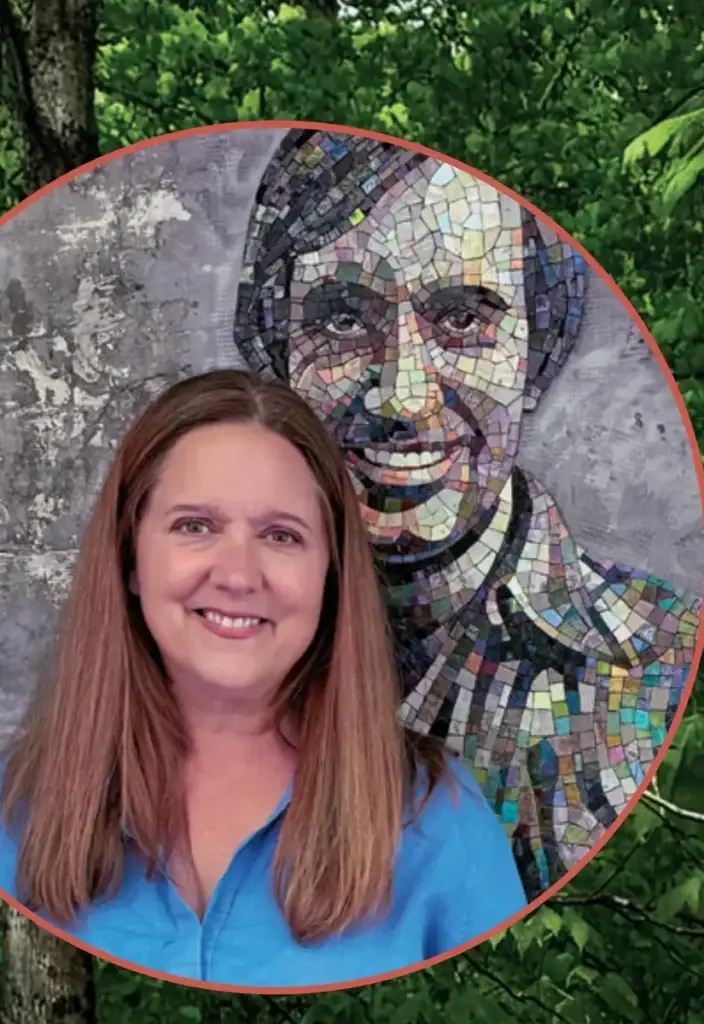
Rachel Sager is a mosaic artist, writer, and founder of The Ruins Project, an eleven-acre museum built into the aboveground remains of the Banning No. 2 coal mine in Whitsett, Pennsylvania. A fourth-generation daughter of coal, she searches for the spaces between places as she tells stories in stone. Since 2015, more than four hundred artists from around the world have set their work into the walls of The Ruins. Rachel teaches mosaicists worldwide through Mosaic Arts Online and writes about craft, place, and Appalachian identity. She lives across the creek from her museum with her husband Robert, and Luce, the Mountain Cur.
Why write about northern Appalachia? What about its stories, characters, culture, questions, and landscapes inspire you?
I didn’t realize I was from Appalachia, let alone northern Appalachia, until I became an adult. The word simply wasn’t used in relation to my Pennsylvania family. Rust Belt was a much more common way of identifying the place where I grew up. Once I started looking at maps and realized that southwestern Pennsylvania really is Appalachia, I raced to embrace it because my feelings fell into place.
I am fourth-generation coal, from the coal mines of Eastern Kentucky and southwestern Pennsylvania. Some of my earliest understanding of that inheritance came through a song my mother and grandmother sang to me, “Put My Little Shoes Away.” Always together, their only instruments were their deep Eastern Kentucky inflections, an accent I was not born with and have never mastered.
I didn’t know then that the song was part of a larger Appalachian tradition. I only knew that it made me cry. My mother and grandmother wanted me to cry. Not with cruelty in their hearts, but with realism. With an embrace of the struggle that is life. And then death. They chose not to look away.
Grief carried by awe is The Ruins experience. If I ever make a difference in the world, I want that difference to be felt and seen and heard right here in Fayette County.
What is the place of northern Appalachia writing in our country’s broader landscape of literature?
I write about this tension in The Appalachian Alchemist. For some, it’s a slight to be left out. For others, it’s an insult to be included. I am fascinated by the tension created between those two feelings.
In a time of homogenization and globalism, Appalachia resists flattening itself into easy definitions. Our quirks become character. Our shortcomings can transform into strange strengths. Things that don’t make sense about Appalachia are sometimes its best subjects. Our gold is not their gold.
Maybe what America needs from us is some of the things it has been trying to smooth away: loyalty, creativity, non-compliance, self-reliance, memory and faith.
My home, Fayette County, will galvanize loyalty while it sucker punches you in the gut.
Even our plants know. One of the best cures for poison ivy grows right next to it in the woods and shady hollers. Jewelweed, when crushed and rubbed onto the skin, gives instant relief to the itching. An old-time Appalachian cure.
Alchemy is more about turning the pain, its very self, into triumph.
How did you come to realize you were a writer?
“Buck did not read the newspapers, or he would have known that trouble was brewing.”
I was sitting on the floor of my fifth-grade school library when I picked up The Call of the Wild and encountered that sentence. I didn’t know anything about writing then, but I knew that a sentence could make you want to know what came next. I’ve been reaching for great literature ever since, searching for the WHYs inside books and paying attention to the language and storytelling that made me laugh and cry.
Being deeply immersed in the excellence of one art, mosaic, gave me the confidence to become a writer because I had something very specific to write about. I wrote essays about mosaic because I was in love with the art. When I started publishing them as a regular newsletter on Substack, I discovered that I enjoyed writing as a way of life.
Then, in the winter of 2024, I won a full scholarship to the final Write of Passage cohort taught by David Perell. That gave me the courage to call myself a writer and to say out loud, I am writing a book.
What’s helped you succeed as a writer?
The Ruins ecosystem.
Artists. Children of coal. Bicyclists on the Great Allegheny Passage. The people who buy art. The people who read the Substack and sometimes pay for it. The people who bought one book and came back the next week for five more. My husband, who generously gives me the quiet time that all writers need.
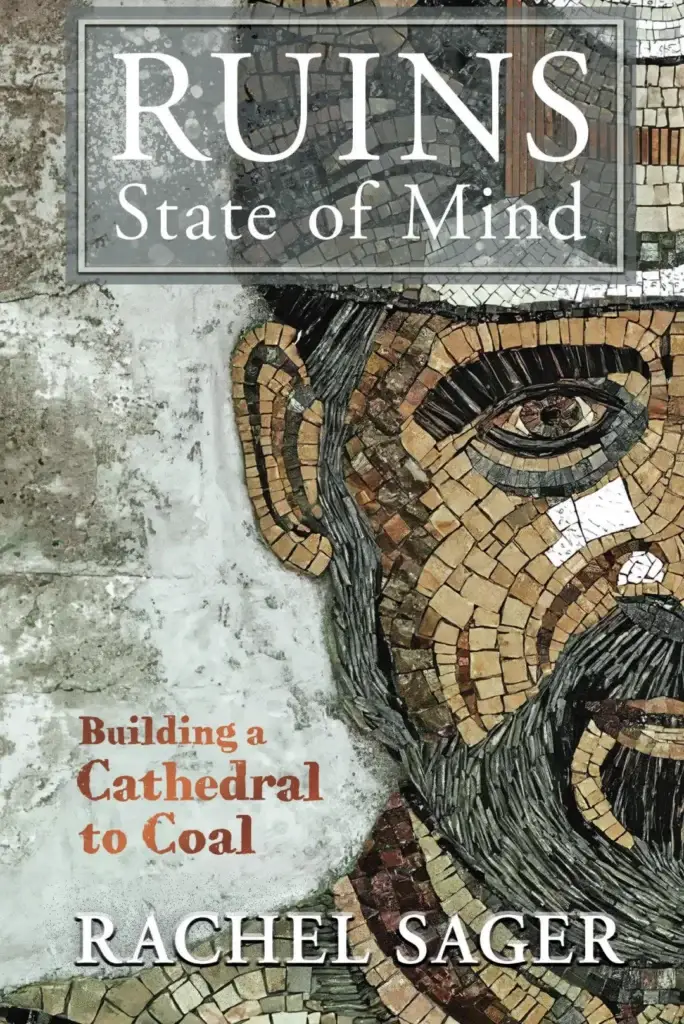
And the book, as its newest branch, needed a team. I published it through The Ruins Press with a wonderful editor, David Mahaffey; designer and formatter, Randie Snow; cover artist, Margy Cottingham; illustrator, Lenore Soles Harris; and blurb writers Ben Moyer, Bryan Perry, and Rachel Davies.
What an ecosystem gives me is a deep, deep well of art, place, stories, other people’s stories, not just my own. Some days, I don’t have room or time to tell it and write it all.