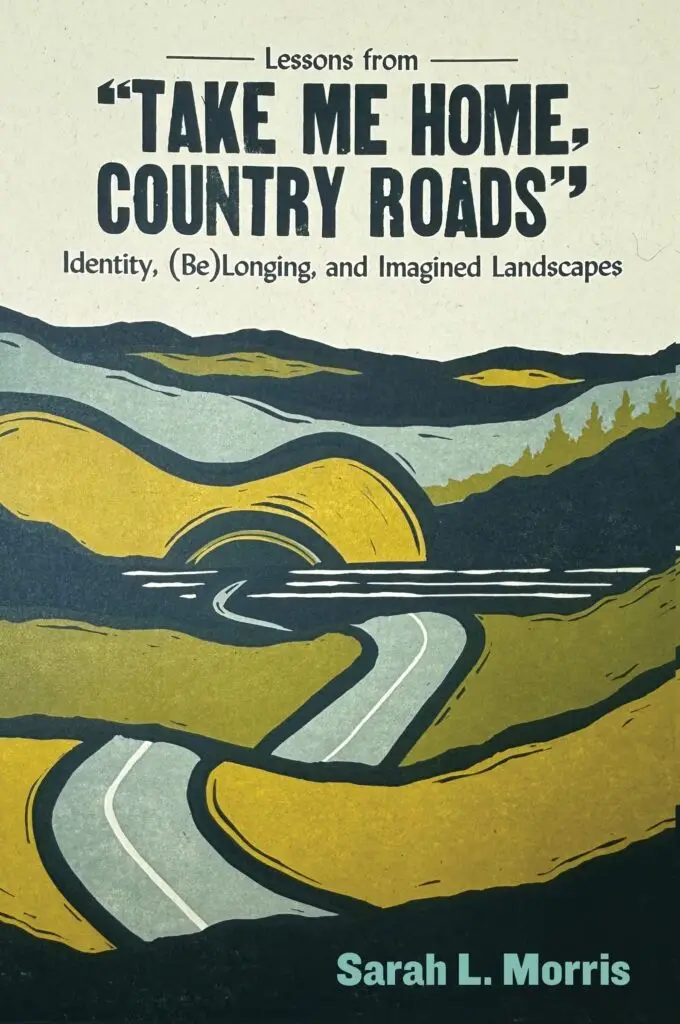
Why write about northern Appalachia? What about its stories, characters, culture, questions, and landscapes inspires you?
As a West Virginia native, I have spent much of my life becoming increasingly aware of living in a real place often inscribed with inaccuracies by the larger cultural imagination. As an educator in Appalachia, I have long worked to help learners reconcile their own understandings about the self in place and the impact of cultural conversation on their own identities. Writing about place gives voice to space and people and allows me to contribute to Loyal Jones’s call for a “mirror of our own making.”
I am inspired by rich histories, deep connections to community, a range of perspectives, and all the different ways that people come to the table across a region that resists, rejects, and redefines the many outside definitions placed upon us. It is critically important to reflect diverse voices, and writing about Appalachia and West Virginia permits me to widen perspective, to dwell in deep questions about lived experiences, and sometimes to find answers
What is the place of northern Appalachian writing in our country's broader landscape of literature?
In her work on writing education, Sara Webb-Sunderhaus borrows the folkloric notion of “tellable narrative” to describe the stories Appalachian learners tell in composition courses. These narratives are often aligned with cultural and social expectations about place, sometimes to the point of stereotype, and deliver what the writer thinks an audience wants to hear, rather than what the writer actually may have experienced.
Untellable narratives, on the other hand, capture stories that are closer to truth but may not align with social and cultural expectations about the kind of story that originates in Appalachia. There is important value in the kind of untellable, unexpected narrative that can only come from and of northern Appalachia, and those of us who live in the region can tell those stories with nuance, ethos, rawness, and truth.
Literature that originates in a place that is so often written about rather than written of and from carries significance and weight but has historically been silenced by outside perspectives. It is time for more writing from and of a diverse Appalachia to come forward and contribute unique perspectives to the national landscape.
How did you come to realize you are a writer?
I have been a reader, writer, and storyteller my whole life, from picture books to short stories to poetry, to academic genres, to my recent (and first) book. I have never known a world without written words and the presence of story.
What has helped you succeed as a writer?
I succeed as a writer through regular practice and patterns of work. For example, when I am working on a project, I benefit from setting aside time each day to write, usually early in the morning as I drink my coffee.
I also benefit from regular, trusted responders who help me see new perspectives. Time, of course, is a gift, and so is the presence of others–writers and readers–who believe in me and my work.